
ProPad Mini
Field support for new products
As Senior Applications Engineer at Sealed Air, I supported field deployment of 20+ ProPad Mini paper cushioning machines across active customer packing facilities, adapting installations on-site to evolving requirements. I performed in-field firmware and hardware upgrades with minimal production disruption, and collected operator feedback during initial testing to surface usability concerns early. Post-peak-season, I conducted on-site wear analysis along the paper infeed path, reporting findings to R&D to inform design improvements—closing the loop between field performance and product development.
Note: Project details have been generalized to remove sensitive information.
Overview
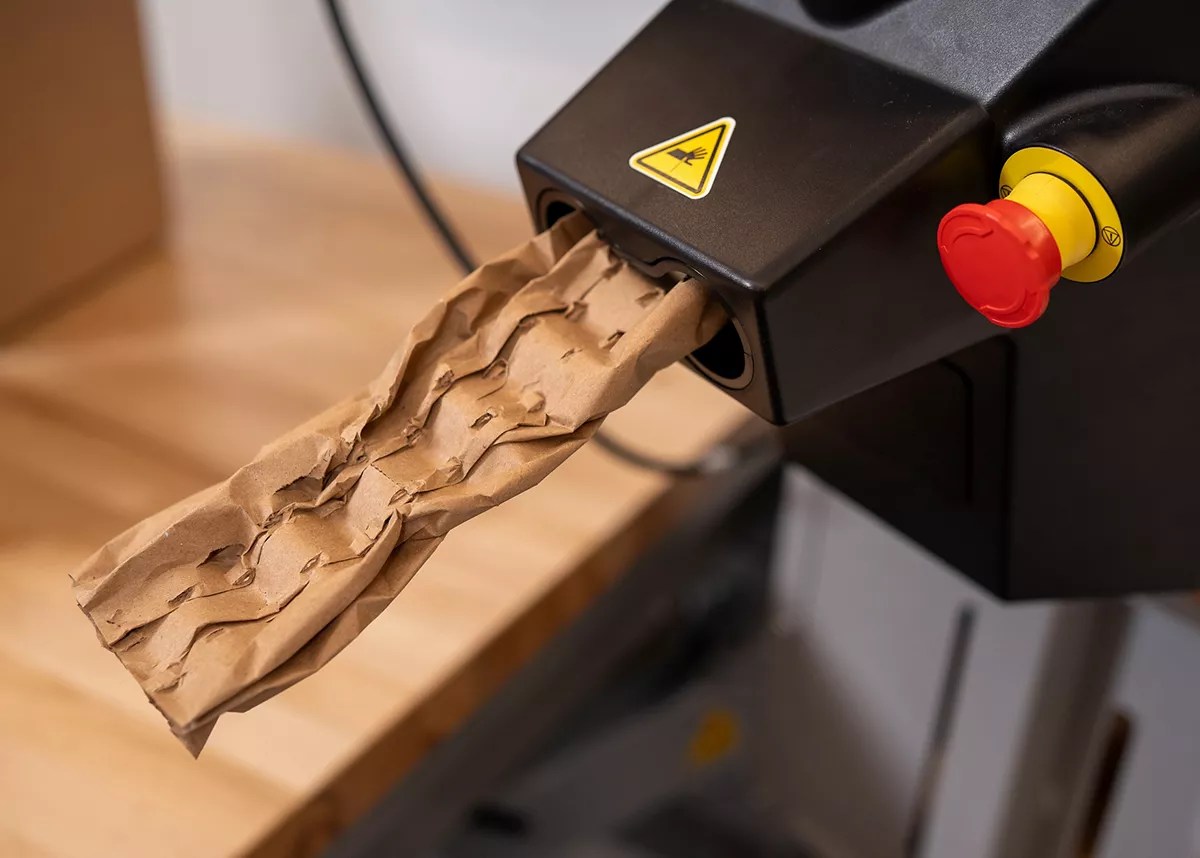
The ProPad Mini is an industrial paper cushioning machine developed by Sealed Air Corporation, designed for high-throughput pack stations across a range of facility configurations. Supporting fanfold paper formats at speeds up to 120 ft/min, it produces protective paper pads used in automotive, electronics, industrial supplies, and e-commerce fulfillment applications. In my role as Senior Applications Engineer at Sealed Air, I supported the field deployment and ongoing optimization of this product across active customer facilities.
Project Objective
My objective was to support large-scale customer deployments of the ProPad Mini across active packing facilities, ensuring reliable integration into live production environments. This included on-site installation and configuration, in-field hardware and firmware upgrades, and systematic evaluation of machine wear to inform ongoing product improvements. A secondary objective was to capture structured operator feedback during initial field testing and translate those insights into actionable input for the R&D team.
What Was Done
I traveled to customer packing facilities and supported field deployments of 20+ ProPad Mini units operating simultaneously on active conveyor lines.
I adapted installations on-site to accommodate evolving customer requirements and facility constraints, including adjustments to stand configuration and paper feed setup.
During live production runs, I performed in-field upgrades to power supply units and carried out firmware updates with minimal disruption to throughput.
I collected operator feedback during initial field testing phases to identify usability friction and surface performance concerns early.
Following peak season, I conducted multiple on-site data collection visits to evaluate wear patterns along the paper infeed path, documenting findings and reporting them back to the R&D team with observations on component degradation that contributed to design improvement discussions for future iterations.
End Result
The field deployment program enabled successful integration of the ProPad Mini across multiple high-volume packing facilities, with machines sustaining reliable operation at production speeds through peak season. The structured wear data and operator feedback I collected gave the R&D team grounded, real-world evidence to prioritize design improvements, closing the loop between field performance and product development. The project also reinforced the ProPad Mini's positioning in sustainability-conscious operations, with paper options including 100% recycled content supporting customers' environmental responsibility goals.

← Previous Post
